I build AI systems that make public information easier to explore, understand and verify.
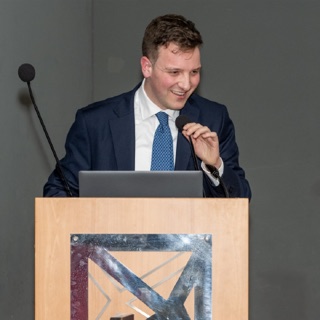
I'm Mirko Tritella, researcher and engineer. I work on AI interfaces to official records and open government data, designed so that every answer can be traced back to its source.
Parliaments, ministries and city councils publish enormous digital records: debates, votes, legislation, budgets, open datasets. This material is public in principle but hard to use in practice. It is scattered, verbose and disconnected, and most of it is never read.
AI can become a new way in. It lets anyone ask a question in plain language and get an answer drawn from thousands of documents. It also creates a new problem: the answer is easy to obtain and hard to check. A system that summarizes the public record without showing its sources replaces one opacity with another.
So I build systems where generation is the last step, not the whole product. Structured data and knowledge graphs keep track of who said what, in which role; retrieval finds the evidence; and every claim is checked against the official record before it reaches the reader.
Democracy depends not only on access to information, but on the ability to understand and question it.
As institutions produce ever larger digital records, AI can help citizens navigate them, provided its answers remain transparent, contextualized and verifiable. That is the space this work lives in.
Featured project
ParliamentRAG
Research project, University of Milano-Bicocca · ISWC 2026, In-Use Track and Posters & Demos
An AI interface for exploring the Italian Parliament through its official records.
Three systems on the same data
ParliamentRAG holds the data, the method and the publications. Three systems read the same knowledge graph, each for a different kind of question.
The Italian Parliament publishes a stenographic report of every plenary sitting, and every roll-call vote, as open data. Together they can answer almost any question about what parliament actually does. In practice, finding who said what, in which debate and in which role means reading hundreds of pages.
ParliamentRAG lets you ask in plain language. It retrieves the relevant speeches and votes, writes an answer that covers every parliamentary group, majority and opposition alike, and links each quotation back to the exact passage in the official record.
Every answer has to meet three guarantees:
Every group is heard. Majority and opposition alike.
The voices quoted are authoritative on the topic. Rapporteurs, the government and the members who have worked on it most.
Every quotation is exact. Word for word, with a link to the official record.
When the guarantees cannot be met, the system quotes no one. A public verifier checks the same three guarantees on any text about Parliament, including answers written by other AI assistants, which can call it as the MCP tool verify_answer.
The answer should never be detached from the record.
In a blind evaluation against Google NotebookLM, judged by six domain experts, the system scored higher on parliamentary-group coverage and citation faithfulness, with human ratings favouring it on source and balance dimensions. The methodology and full results are in the research paper.
One graph of everything parliament says and does. Stenographic reports (Akoma Ntoso XML) and the SPARQL endpoints of dati.camera.it and dati.senato.it become a single knowledge graph of speeches, speakers, votes and acts, with EuroVoc subject links.
Retrieval that protects the diversity of voices. A dense vector channel and a graph channel are fused by a merger that balances relevance with party coverage, speaker diversity and political salience, so minority positions are less likely to disappear. Technically: multi-view hybrid retrieval.
Speakers weighted by role, not volume. A query-specific authority score with six components (profession, education, committee membership, legislative acts, interventions, institutional role) selects the most credible voice for each parliamentary group.
Every quotation verified. Generated quotes are matched verbatim against their source passage; anything that cannot be verified is removed before the answer is shown.
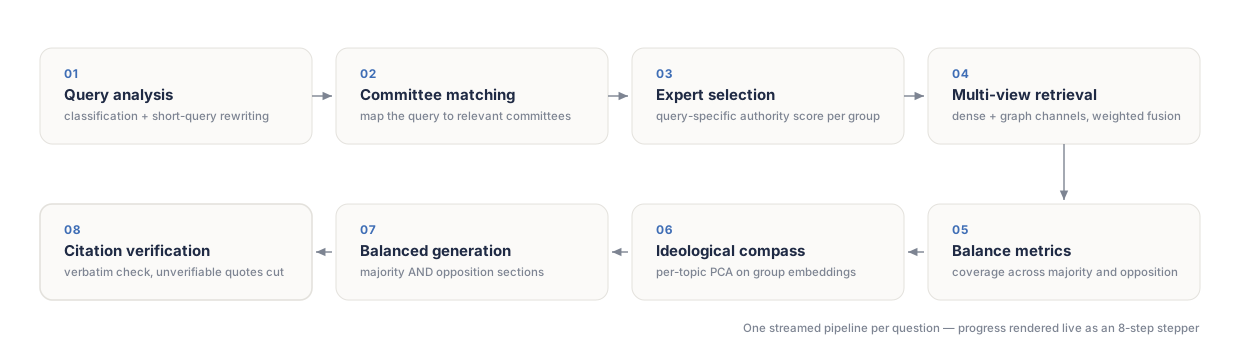
The query pipeline: from question to a balanced answer with verified citations.
1,194 plenary sittings · 266k+ speech passages · 28.3k roll-call votes · 9.6M individual vote records Italian Parliament, XIX Legislature, updated every night from official open data
The work is fully open: the knowledge graph is published as an RDF dataset on Zenodo (CC BY-SA 4.0) and in tabular form on Hugging Face, with project terms under the w3id.org/parliamentrag namespace. The system is also an MCP server, so AI assistants can query the official records directly. The code is archived on Zenodo.
Python · FastAPI · Next.js · Neo4j · OpenAI · RDF · MCP. Supported by the EU Horizon Europe programme through grant 101189771 (DataPACT).
Where it started
From local open data to AI over public knowledge
My interest in public data started locally. In Roseto degli Abruzzi, my home town, election results existed only as PDFs on the municipal website; I extracted them and republished them as machine-readable data. During the pandemic I built a site that tracked the town's COVID-19 numbers day by day.
ParliamentRAG asks the same question at national scale: how can public information become easier to access and use? First publishing the data, then building the interfaces to understand it.
Results of the 2016 municipal and 2019 regional elections, extracted from PDFs on the official website and republished as machine-readable CSV and JSON.
Walk into the chamber and open the work of the member in each seat. A ParliamentRAG project.
Research
The questions behind the systems
How can AI answers remain connected to evidence?
Retrieval-augmented generation grounds generated text in retrieved sources; citation verification then checks each quotation against the record. Grounding without verification is a promise, not a guarantee.
How can knowledge graphs improve access to public information?
Representing speakers, roles, debates, votes and acts as entities and relationships makes it possible to answer questions that plain text search cannot, and to keep the context around every retrieved passage.
How should a system represent who is speaking, and in what context?
In institutional records, who speaks matters as much as what is said. Authority-aware retrieval models the speaker's role, expertise and mandate instead of treating all text as equal.
How should we evaluate AI systems that summarize public records?
A single accuracy number hides what matters: coverage of viewpoints, balance across groups, faithfulness of quotations. Evaluation of these systems is a research problem in its own right.
Retrieval-augmented generation · knowledge graphs · information retrieval · semantic web and linked open data · evaluation of LLM systems.
Currently working on the journal extension of the ISWC paper: the whole Parliament, political positions classified passage by passage rather than projected onto embedding axes, and checking the three guarantees on any text.
I keep a navigable map of the literature behind this work: papers, methods, datasets and open research gaps, linked to the system components they inform. Explore the literature map.
Publications
2026
Who Speaks Matters: Authority-Aware Multi-View Retrieval-Augmented Generation over Italian Parliamentary Proceedings
Can an AI system summarize parliamentary debate while preserving the diversity of voices and keeping every quotation faithful to the official record?
I grew up in Roseto degli Abruzzi, on the Adriatic coast. My first projects were about my home town: republishing its election results in machine-readable formats, tracking its COVID-19 numbers day by day. The instinct was the same then as it is now: public information should be usable by the public.
That instinct scaled up. I studied Computer Science at the University of Bologna and Data Science at the University of Milano-Bicocca, where I carried out the ParliamentRAG research, presented at ISWC 2026. What holds the work together is a simple requirement: an answer about public life should be checkable against the public record.
I live between Rome, Milan and Roseto. I write research notes and comments on public data and AI in Notes.